Disappear into Wonderland


Mrs. Russell (our Depute Head) is a big fan of Alice's Adventures in Wonderland by Lewis Carroll, but she isn't the only one. Alice's adventures remains one of the most popular children's books of all time - it has never been out of print for more than 150 years! 

If you haven't read the book or seen one of the many movies, tv adaptations, plays (it was the Cbeebies Show recently) over the years you have probably still heard about it as part of pop culture. The story itself seems simple - Alice finds herself in a curious place called Wonderland one afternoon when she chases a rabbit down a hole. 

It's not just children who love the story. Lots of Adults find that as they age the book reveals more to them, including being used in neuroscience to reveal more about the brain. The V&A was due to hold an exhibition this year about it (it's been postponed due to the current situation but the BBC Secrets of the Museum has behind the scenes on the real Alice) and the British Library has an online collection of articles and artefacts you can browse through at home to learn more about this classic tale.

The original story was illustrated by John Tenniel but as it has been republished over the years, others have tried their hand at illustrating the work including Salvador Dali, Chris Riddell and Helen Oxenbury (the BBC Beauty of Books episode 3 talks about this in more detail).

Even if you have read Alice in Wonderland it's a book that a re-read can reveal more to the reader.
Or if you fancy a challenge why not try to Escape from Wonderland yourself in this escape room.

Get hooked on webcomics

Webcomics are usually passion projects so the topics, quality and frequency vary hugely. Some are professional artists sharing their work with the world and using other avenues to make money from their art or writing a webcomic as a side project. It's worth trying a variety to find the ones you enjoy, plus as the ones I am suggesting have got pretty hefty back catalogues to read through.

There are lots of webcomics I really enjoy reading, these ones are all still on going:
Breaking Cat News is cats telling us the news.
Slack Wyrm - is about a very lazy dragon
JL8 - imagines the Justice League at age 8
Heartstopper - LGBTQ+ teens in high school
The Flying Ship - LGBTQ+ fantasy quest
Phoebe and her Unicorn - one girl and her unicorn
Dinosaur Comics - t-rex deals with life
Check, Please! - Baking and Ice Hockey

If you are a library fan then you can also give Unshelved or Library Comic a go both of which I really enjoy, though I fear they may be funnier to those of us who work or volunteer in libraries.

If you are still looking for more Book Riot produced a list of 50 they'd recommend or try Hiveworks Comics or Tapas both publish a wide range of webcomics you can read for free.

I love a daily comic strips like you'd find in newspapers by professionals as well. If you fancy those you can find comics like 'Garfield' and 'Peanuts' can be found here on GoComics . They also have the wonderful 'Calvin and Hobbes' and 'Get Fuzzy' both of which you can read the complete the collection. You can pay a subscription but you can also just read them for free on the site.

If you fancy combining comics with learning try Dekko Comics - you can read them online for free and browse by subject.

You can download a copy of the Beano for free. Or Comixology has some free comics you can download. Or DC Comics have a made a bunch of comics free until June.

Secret Book Club - May

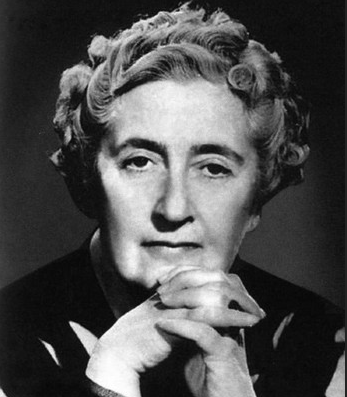
This month’s SBC reading recommendation is Agatha Christie. 

Murder mysteries are a popular because they provide comfort. There is danger on the page but we know the case will be cracked and the villains caught, which is rather nice when the world around us is much less certain.

The 1920s to 1930s is described as the ‘Golden Age of Crime’. The murder victim is killed off swiftly with little description of the scene, instead the focus is on the, often amateur, crime detectives. These clever characters rely less on forensics, and more on observing suspects and clues which provides the reader with a puzzle to solve along with our sleuthing hero.

Agatha Christie aka the ‘Queen of Crime’ she wrote some 66 mystery novels and over a hundred short stories in her life. Her characters include Hercule Poirot and Miss Jane Marple, and her works have been turned into radio plays, stage shows, movies and TV series. In fact her play The Mousetrap is the longest running show in the West End.

2020 is the 100th anniversary of her first book being printed – The Mysterious Affair at Styles - which introduced the world to Hercule Poirot for the first time. Reading older fiction like Christie isn’t without flaws. Modern attitudes to people have changed a lot since she wrote her first book 100 years ago. Things like homophobia, racism, sexism, anti-Semitism (seriously all the-isms) are sometimes jarring to a reader today but they are part of the world they were writing about, just as much as afternoon teas, servants and serving soldiers. Not only do they paint a picture of a society we no longer live in but I find they help me to see how far we have come, even if we still have some distance to go.

Agatha Christie is one of the favourite writers. Her books are short, fun to read and she writes puzzle crimes – where you are left feeling sure if only you’d paid more attention you could have solved the crime. You can read The Mysterious Affair at Styles by Agatha Christie for free as it's now out of copyright or if you’d rather listen to it catch ‘Phoebe Reads a Mystery’ where you will find a full audio version.

Find out more:
You can find out more about Agatha Christie at agathachristie.com they also have a 2020 reading challenge with titles being suggested from across her work.

All About Agatha is a podcast all about the novels and short stories of Agatha Christie – warning this is a book discussion podcast so make sure you have read the book before listening.

If you want to know more about Agatha herself and the social world of the Golden Age detectives then listen to ShedunnIt.  It includes episodes on different authors (including Christie) and themes in these novels such as LGBT characters and food. It’s spoiler free usually so even if you haven’t read the book yet you can give it a go.

You can also catch Christie's work on TV. ITV show some regularly and you can catch some episodes on the ITV Hub. As these stories don't have a an over reaching arc you can just watch them out of sequence and still enjoy a complete story.
Agatha Christie's Poirot
Agatha Christie's Marple

Other people to read:

Other Golden Age authors to try:
Margarey Allingham
Ngaio Marsh
Dorothy L. Sayers
Josephine Tey

Modern Authors to try:
Murder Most Unladylike by Robin Stevens
Magpie Murders by Anthony Horowtiz

Modern genre to try:
Cozy Crimes - murder etc. occur off page, amateur detectives solve the case and  it takes place in a small community.

Postcard from a Library Mascot


Good Day!

Goose - wizard, magic missile extraordinaire and library mascot here!

With the news of an unforeseen circumstance akin to a plague literally sweeping the lands, I decided to quickly head off elsewhere. Although I have left along with the other library mascots so we could be safe, many have also decided to hold fort and stay.

Of course, as a fairly accomplished wizard, this was not the first time i have become isolated. Many moons ago, before my wand and skills had been forged, I had a formative experience upon a lighting fixture in the lower part of the library. Many tried to rescue me, but their efforts were in vain.

For my journey, which I'm sure you will be glad to hear was a success, I brought some essentials with me. My badges of honour, my wand... and Larry's hat - he was over the weight limit for the baggage on his plane, so I offered to look after it for him.

I arrived safely, and once I was into the resort, I met three acquaintances who I'd previously seen at Readathon last year, when we were all asked to attend.

Duck was the nicest one when I first met the three- they definitely seemed the most interested in my skills as a wizard and asked me to teach them some tricks, to which I obliged. I've discovered after meeting them again that they can float, which is nice.

Taco was also quite nice. I assumed that he would also be a squirrel considering the rest of us were, but no - he was literally a sentient Taco running an indie art gallery in the backroom. Because of the similar appearance of each member Taco's species, many thought he was a narcissist running an exhibit about himself, but I can confirm he was just a misunderstood artist trying to make a mark in a human world. Recently, he's been telling me, he's become an activist for fair portrayal of Taco's in the media - and says the imminent closure of many restaurants selling tacos has been a controversial win for the cause.

Last but not least was Chestnut, or Chestnut E. Tiverton for his full name. Bit of a grumpy so-and-so - insisted he was the head of the SQA and that he should be helping prepare the exams over in Little France. He also insisted that he would only speak in "Scottish Qualifications Authority Reference Language" (or SQARL for short) - the SQA's choice of computing code commonly known as Squirrel - which made communication a pain. When I asked him if he wanted any pizza, he replied with "SET WouldYouLikeSomePizza TO No, SEND WouldYouLikeSomePizza TO DISPLAY". When I met him again today, he was like a different squirrel - far more polite and actually spoke normally. This was possibly caused by the announcement of there being no exams the day before, and he seemed a bit distant and shaky.

Anyway, I fear this postcard will arrive late because I've entrusted it to the sharks. If you haven't met them, their understanding of modern technology is atrocious, and they will likely try to fax it over. I'm sure they will figure it out eventually but unfortunately it will arrive when it arrives.

I will see you all again soon

Goose

Poetry in your pocket

It's Poem in your Pocket Day and since we pretty much all carry a phone I thought some online links to poems might help you achieve the task of having a poem in your pocket.

First up is Sarah Kay and her spoken word poem 'If I should have a daughter' which I just adore. Or if you fancy someone British try Harry Baker, a champion slam poet performing the 'Scientist and the Bumblebee'. (he is one half of the musical duo Harry and Chris).

If you fancy something older the BBC have created an amazing collection of Robert Burns poems being read aloud. There is a wealth of talent reading but I really love Alan Cumming. Or if you fancy something Scottish that isn't Burns try the Scottish Poetry Library with their collection of more than 3,000 poems on their website you are bound to find one that speaks to you. Don't know where to start? Try the annual best of Scottish poetry collections.

There are also number of great teen authors who are writing in free verse (poems that don't rhyme) - they are longer poems, tackle complex themes and are published as books.

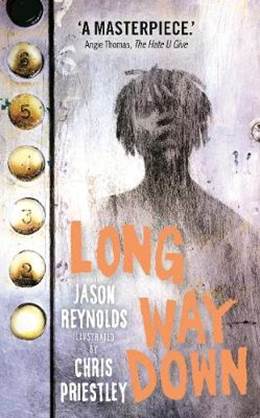
Long Way Down by Jason Reynolds
When his brother gets shot, it's time to follow the code and take out who pulled the trigger.


The Poet X by Elizabeth Acevedo
A teenage girl is discovering boys but her strict parents have banned all contact until marriage. 


The Weight of Water by Sarah Crossan
A teenage refugee and her mum move to England and life seems very lonely. Though perhaps it's not as bleak as it first seemed.


Tell a story

Storytelling is as old as we are from recounting our own adventures to creating complex fantasy worlds, storytelling is a way to explain the world around us and escape the place we are in. Perfect in fact for escaping from a global pandemic or processing what's happening.

You wouldn't be the first to put pen to paper and write about your lockdown experiences. Elizabethan London was with riddled with diseases but regular outbreaks of bubonic plague shutdown the theatres. Between 1603 and 1613 London Theatres were closed 60% of the time because outbreaks. Research suggests that William Shakespeare may have written King Lear while in lockdown as a result of plague.

The thing is you don't have to write some epic, everyone's story is unique and fascinating. Storyteller and awesome, spoken word poet Sarah Kay shares her love of hearing other people's lives and shares some of her own.

However, if you need some help to get started on telling your story BookBound 2020 kicks off today. It's a virtual book festival running for the week via youtube (plus it's staying available afterwards if you missed it). You can find the programme here. Plus there are lots on other places to get help on writing including The Scottish Book Trust, who also run a monthly writing competition. Or Authorfy who are publishing 10 minute challenges to get you going.

Now you just need to grab a pen and start telling your own story!

Take it further

Shakespeare's globe are posting full play for free for limited time - right now it's Romeo and Juliet. There are also more from the Bard on the BBC iplayer which has performances from the Royal Shakespeare Company and the Royal Opera House as part of their lockdown programming..

If you fancy reading about others dealing with isolation here are some recommendations:

The Martian - Andy Weir. Stranded on Mars and with no apparent way home, can he survive long enough for help to come?

Room - Emma Donoghue. Jack is 5 and the room is his whole world, but he and his mother are prisoners to Old Nick.

Everything, Everything - Nicola Yoon. Girl who is allergic to the world is stuck in her house with only her mum and nurse for company.

Listen to a story

Sometimes listening to a good book is just the ticket. You might fancy something to keep you company on your daily exercise or want to occupy your mind while you do dishes or just a chance to sit back and enjoy a story. Luckily the internet has bunch of places to get an audio book from.

If you have access to your library borrower number you can access West Lothian's audio book collection via Borrow Box. 


World Book Day has full length children and teen audio books on it's website. I'm enjoying 'A Pinch of Magic' by Michelle Harrison. Three sisters are imprisoned by an ancient curse, each has an magical object but is that enough to break the curse?

For teen titles you can also sin up the Sync free Summer Reading programme. It's US based but the audiobooks are available anywhere, they offer two selected audiobooks every fortnight for free. It launches this year on the 30th of April.

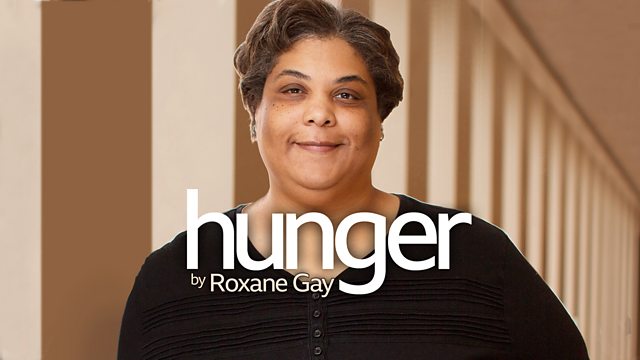
For adult books try BBC Sounds  (also an app) has a bunch of free audio books. Including Roxane Gray's fantastic memoir 'Hunger'.

Or you can also sign up to uLibrary for free and enjoy unlimited access to audio books until the 31st July 2020 which includes popular authors like Lee Child and Anne Cleeves.


Open Culture and LibriVox have a vast collection of out of copyright books in audio form. If you fancy Jane Austen's 'Pride and Prejudice' but found it hard to get into or found Mary Shelly's writing style in 'Frankenstein' too hard then listening to the audio version can be a great way to enjoy these books.


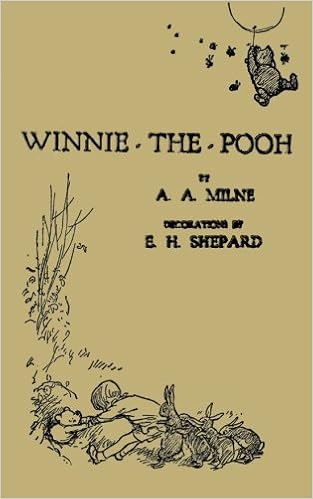
Audible are offering a free service during the shutdown. They have stuff for all ages and in a mix of languages but my pick of the titles on offer currently are the Winnie the Pooh collections. Not only are they comforting to listen to but Pooh is a bit of a philosopher and you'll discover quite a few quotes to inspire.


I'd also recommend having a quick listen to John Finnemore's Souvenir Programme sketch - Pooh's Interdivention for a more comic and grown-up look at Pooh's worrying love of honey.

The Librarian's Current Obsession.

The whole lock down has me thinking about the Villa Diodati on Lake Geneva, Switzerland, 1816 – the 'year without a summer'. I'm not the only one who finds this a captivating moment in history, the latest series of Doctor Who also had an episode set there.

A group of English friends were staying at the Villa for the summer. The line up included the rock star poet of the age Lord Byron (28), his personal physician John Polidori, poet Percy Shelley (23), his mistress Mary Wollstonecraft Godwin (18) and their four-month-old son William plus Mary’s step-sister Clare Clairmont (eight months younger than Mary and Byron's mistress). However it wasn't the blissful summer retreat they had hoped as the group found themselves trapped in the house for days due to bad weather.


Mary Shelley wrote of their stay: “it proved a wet, ungenial summer, and incessant rain often confined us for days to the house. Some volumes of ghost stories translated from the German into French, fell into our hands.” This gave rise to an idea. “’We will each write a ghost story’ said Lord Byron; and his proposition was acceded to". Over the next few weeks she went on to write ‘Frankenstein, or The Modern Prometheus’.

It remains a classic today and it's been argued it's the first true work of science fiction - possibly being inspired by a real doctor's experiments. Interestingly, two years later when she published, she withheld her name, preferring instead to publish it anonymously. But this meant she didn’t have any copyright protection, so lots of people were republishing it or making it into plays and she wasn’t getting any money. In 1820 she added her name to the book.

It's not just her novel that's worth a read, Mary Shelly is also a rather interesting character and well worth finding out more about.


Find out more:

Read ‘Frankenstein, or The Modern Prometheus’ by Mary Shelly 

Spark Notes for Frankenstein

‘Your Dead to Me’ BBC Podcast – Mary Shelley episode. 

Read Romantic Outlaws: The extraordinary lives of Mary Wollstonecraft & Mary Shelly by Charlotte Gordon

Read Trans Writers

International Trans Visibility Day was this week and to celebrate I thought I'd share some Trans authors.

Watch Trans Authors
If you fancy more watching an author than reading, Jackson Bird is a popular youtuber who just published his own memoir - Sorted.

A number of poets shared a poem for Trans Viability Day. You may remember Harry Josephine Giles from the JYHS Library Comic Con a few years ago. They've shared their poem 'No Such Thing As Belonging'. Scottish Trans Alliance also shared spoken word poems from Ellie and the (dys)Functional System and 'The Wrong Fairy Tale' by Gray Crosbie

Read Trans Authors

Phoebe and Her Unicorn by Dana Simpson is a webcomic (though you can buy the books of the comics collected). Dana is trans and the stories are her reliving her childhood in a magical way as the girl she wasn't allowed to be.

Assigned Male by Sophie Labelle is a great web comic (again you can buy the books) all about being about a trans girl. Plus she's just launched CandyCore Comics which is about LGBTQ+ cute critters.

Juno Dawson is a UK trans author who writes teen fiction ('Meat Market', 'Say Her Name') and non-fiction ('This Book is Gay', 'Mind Your Head').  You can get a copy of 'Hollow Pike' on Amazon kindle for 99p just now. Lis think she's being paranoid, no-one is really trying to kill her and the witchcraft legends are just stories. Although maybe she isn't paranoid, maybe the stories are true and she is great danger.  (Her new book out in August is called 'What's the T?' and is help guide for Trans teens - totally adding that to the library wishlist).

Also on kindle for 98p is 'If I was your Girl' by Meredith Russo . It's about 18 year old Amanda starting her new school, but should she tell her new friends she used to be Andrew?


How far can we travel?

As nobody can travel any distance during the next few weeks let’s see how far we can travel in reading miles.
5 pages read (or 10 min if on ebook) = 1 mile travelled
Starting in Livingston our first destination will be Newcastle.
137miles = 685 pages
Email me with the number of pages read and once we have reached our target we will choose the next destination from 3 options – the most popular being chosen.
If we choose to ‘fly’ then reading air miles will be 5 pages = 10 miles travelled.
When a destination is reached we can also post any interesting facts you have about the location. I will share a virtual tour of some sort so we can explore somewhere new.
We'll be sharing the fun on the Secret book Club Team - drop me an email if you want to join. 

Things to keep you busy

There is a wealth of stuff being made available online try keep us busy during the lockdown. So here are some of the things I have found this week that I think might be useful, or at least interesting.

Educational

I just found the best library/Gaming crossover by Western Sydney University - it's a guide to referencing that they've turned into a computer game dungeon crawl!  perfect for anyone thinking about Advanced Highers next year or heading off to Uni and wanting to get a head start on these vital skills.

Babble.com are offering 3 months free to students to learn a new language. 

Audible are offering free audio books during this time - for free and no login or bank details required. It includes stuff for all ages and includes books in French, German, Spanish and Chinese.

Open Library have removed waiting times on their ebooks until June. So multiple people can now read the same titles. It's a US based project sharing out of print titles so there is some amazing stuff in the collection and well worth a browse.

For more digital book ideas try the ebook tab on this blog.

Best of Social Media - book edition
  • Patrick Stewart is reading a Shakespeare sonnet a day on twitter @SirPatStew 
  • Alex T. Smith is sharing a 3 story starters a day on his twitter@Alex_T_Smith
  • While Kelly Yang is doing teen writing classes for free on her instagram.
  • If you fancy more of a meet the author then A Case for Books is launching 'Book Wanderers Club' thrice weekly starting Friday with a chat with Robin Stevens 

  • Illustrators are in on the act as well my personal favourite is Rob Biddulph 

  • You can find loads more by looking for the #UnitedByBooks on twitter.

Try Something Fun
If you fancy from STEM fun Makerspaces.com has some ideas that might be possible with stuff you have at home. Or Kiwi Crates have a daily project and have released some of their STEM projects for free - there is stuff suitable for all ages.

Podcasts are plentiful but I'm really enjoying Shedunnit a podcast about Golden Age Detective books.

If you'd like to try Dungeons and Dragons you only need one other person and you can play The Hermit’s Sanctuary a free, full-length, introductory adventure. 

Or you could download a copy of If you are looking for a game to play with your household - might I suggest Mr Lister. Big Potato games are giving it away for Free! 

Mental Health 
Author Matt Haig said on twitter:

  "Limit news intake when you need to. Talk to loved ones more than ever. Eat well. Focus on the day, not the year, in front of you. Appreciate the future is as unknowable as always. Be as safe as you can. Let yourself feel what you feel. Find a routine baggy enough to live in. Be."

Remember the Library blog has a Mental Health tab that might offer some help. I'm adding to as I find more resources (so any ideas gratefully received).

Get busy with some self directed work

Lockdown is a great chance to learn something new and knowledge is never a waste. Here are some places to get you started that you can find free online courses or other opportunities to discover something new:

BBC Bitesize: there is more on there than just support for your school work. Take some time to explore it a bit more.

Future Learn - offers free access to online courses - there is a huge variety from screenwriting to archaeology they run for a range of weeks and are a great chance to learn about something you are interested in.

TED Talks - Amazing wealth of ideas and knowledge on a vast range of topics. Loose yourself browsing the collection.

Glasgow Science Centre are posting daily videos on their youtube with science experiments to do at home.

Visit a Virtual Library - National Library of Scotland and the British Library both have curated tours through their collections which are well worth a look.

Visit a Virtual Museum - the National Museum of Scotland, Victoria and Albert and British Museum have amazing online collections you can explore from the comfort of home.


The 5 E's of Reading

1. Escape
Stuck in the house - read. You can travel to other countries, planets, worlds and realities when you read.

2. Enjoyment
A book can pull you in make you laugh, cry and everything in between. A good story will pull you in and stay with you even when you are finished.

3. Empathy 
It's hard to care about strangers with problems far removed from your own but when you read you care about the people, about their struggle. It gives you a better understanding of other people and where they come from.

4. mE time
When you read for fun, read stuff you want to read, do something just for you. Reading is a personal thing no two people read a book the same, even re-reading can make you think differently.

5. Education 
As Dr. Seuss once said "the more you read, the more you know." Learn how to wrestle bears, protect yourself from kelpies and dye your hair using kool-aid, how the White House kitchens work, how the Roman sewage system operated and how to rise the the rank of Commander in the time of Horatio Nelson. Know more.

Home Schooling essay related videos

Sky news homeschooling article dating from Nov. 2018. Lasts 5min. Tries to offer both sides showing the positives and negatives of if being done badly.

Nadia Sawalha (from Loose Women) gives a parents perspective (UK England). Positive and pro-homeschooling. Lasts 5min 

Phebe Lou (US youtuber) talking about her pro/con list for homeschooling from someone who is home schooled. 6min 

India Grace - home schooled UK instead of high school roughly 15 in the video. She talks about her homeschooling origin story but skip to 6.30 to find out what her experience is actually like. It's very much a typical teen storytime youtube video lasts 20min.

American Homeschooling Infographic - American but it does move through the basics at a fair clip the video actually ends at 8.07 the remaining being an advert.

Is homeschooling a good idea?

Rough plan for a discursive essay:

Paragraph 1  - What is Home Schooling?

Some Basic Information on Home Schooling in Scotland

Some Basic Facts on Home Schooling in the UK
Issues Online - Home Learning in the UK

Paragraph 2 - What is good about Home Schooling?
Guardian article for home schooling

Paragraph 3 - What is bad about Home Schooling?
Daily Mail Article against home schooling

More places to look for both side of the argument:


Paragraph 4 - I think Home Schooling is...

Should the government makes laws against fake news?

Guideline for a discursive essay with suggested sources.

Point 1 - What is fake news? Why should the government take action?

Fake News can also be called disinformation or misinformation. It isn't new and false or misleading information has always been around, the problem now is that more people can see and share these stories.

Debating Matters has a good resource including more on key terms, background and essential reading. (Some of this is useful generally).

BBC Define fake news as:

"False information distributed deliberately, usually for political or commercial purposes"

For more details see this short video

The government should do something about fake news because:

UN Convention on Rights of the Child
Article 17 (access to information from the media)
"Every child has the right to reliable information from a variety of sources, and governments should encourage the media to provide information that children can understand. Governments must help protect children from materials that could harm them."


Point 2 - Examples of Fake News

The BBC class this into three types:


Point 3 - Government should make laws stopping fake news because:
Unreliable information can impact on politics and change how people vote in elections  Fake news is a problem for elections.
Angela Merkel arguing that governments need to take action on Fake News
Buzzfeed article on how fake news was more popular than correct news.
This this article on how fake news helped Donald Trump win.

Point 4 - Government should make laws stopping fake news because:
Misinformation can cause violence - two men burned to death in Mexico because of fake news
and Facebook accused of fueling violence in Sri Lanka

Point 5 - Government should make laws stopping fake news because:
Quick Statistics on why is fake news harmful to you as a person.
Plus Fake News can actually give you physical and mental health problems - Article on Fake News being bad for your health.

Point 6 - Some governments have or have tried to pass laws.
Singapore's Government is one who have made moves and this article shows both sides of that 
discussion.
You can also see what other countries are doing or trying to do by scrolling through this list.
 

Point 7 - Government making laws stopping fake news could be a problem because:

The UN Declaration of Human Rights says in article 19:
"Everyone has the right to freedom of opinion and expression; this right includes freedom to hold opinions without interference and to seek, receive and impart information and ideas through any media and regardless of frontiers".

Stopping false and misleading news could stop free speech which criticises or mocks governments, companies or people in positions of power.

The big concern is that those who disagree with those in power are stopped from having a voice. For example if it is illegal, anyone who the government decides is creating fake news could be arrested even if they are telling the truth.

Campaigners concern over laws and examples of some laws already employed
Article on Fake News threatening free speech
Russian clamp down on what people are saying on social media

Point 7 - Governments don't need to make laws because social media companies and others who host this fake news should take action to stop it.
Facebook take action to fact check stories.


Point 8 - Governments don't need to make laws we need to take responsibility
Article on why we need to take responsibility

Conclusion - what do you think? should the Government do more to make sure information is reliable?

Taking it further

Also studies suggest that it's the over 65's who are worst for sharing and spreading fake news not young people who have had to be more tech savvy from the start.


French Christmas


Task:
Find out about some French Christmas Traditions - present your findings in a powerpoint or poster.

Here are some ideas to get you started:

Santa Claus is known as le Père Noël. In some parts they celebrate the feast day of St Nicolas on the 6th.

St Nicolas has a helper le Père Fouettard.

In the city of Lyon there is a Festival of Lights known as La Fête des Lumières.

In Provence it's traditional to display a nativity scene (une crèche) which always includes a figure called le ravi.

Instead of a stocking hung by the fire, French children use a shoe (Le soulier de Noël).

On the 6th of January (L' Épiphanie) they traditionally eat King's Cake (La galette des Rois).

In Quebec, Canada (where French is the main language) it's so cold that every year they can build an Ice Hotel - where even the beds are made of ice! They also have a Winter Carnival (Carnaval de Québec) complete with a mascot called Bonhomme.

More information:
https://www.thelocal.fr/galleries/culture/christmas-in-france-top-ten-traditions
https://people.howstuffworks.com/culture-traditions/holidays-christmas/christmas-traditions-around-the-world-ga5.htm
https://frenchmoments.eu/the-french-traditions-of-christmas-les-traditions-francaises-de-noel/
https://www.frenchtoday.com/blog/french-culture/french-xmas-vocabulary-christmas-traditions-france

German Christmas


Task:
Find out about some German Christmas Traditions - present your findings in a powerpoint or poster.

Here are some ideas to get you started:

Is that you Santa Claus? 
There are four different names given to Santa Claus in Germany depending on where you live. He is called Weihnachtsmann, Nickel, Klaus, or Niglo.

Many Germans celebrate Nikolaustag (St. Nicolas Day) on the 6th of December.

If you fancy a bit of history have a look at:
Belsnickel - an older fur glad gift bringer who is said to be the inspiration for the Father Christmas described in the classic Christmas poem 'A Visit from St Nicolas'.

If you fancy a bit of creepy Christmas fun have a look for:
Knecht Ruprecht - St. Nicolas's Helper in Germany
Krampus - St. Nicolas's Helper in Austria

Food Glorious Food
Just like in the UK food forms an important part of the festivities. For example on Christmas Eve, there's an evening feast, generally of carp and potato salad.

das Christbaumgebäck - German Christmas tree pastry
der Lebkuchen, ginger spice cookies
der Dresdner Stollen, a moist, heavy bread filled with fruit and marzipan.


More Information
https://www.whychristmas.com/cultures/germany.shtml
http://www.vistawide.com/german/christmas/german_christmas_traditions.htm
https://www.german-way.com/history-and-culture/holidays-and-celebrations/christmas/


5 Things to help you read for school

Photo from D Sharon Pruitt

1. Limit distractions
Your environment matters so hide the technology away or sit away from it. Ask yourself if listening to music really helps you focus. If it does you might want to consider what type of music helps you most.  Where are you reading? If you are lying in bed is that more likely to make you sleep than sitting at a desk?

2. Have a pen and paper handy
As you read make a note of questions you want to check or thoughts you have. Then once you've done your reading go through your notes and look up anything you wanted to check.

3. Get comfy
You are reading for a wee while so be prepared for that. Use a comfy chair or a cushion and have a drink and snack on hand. You could even reward yourself with a little treat for reading each paragraph or similar (just be careful not to use eating as a distraction).

4. Talk about it
Once you've done your reading find someone to talk to about what you've been reading. Having the chance to discuss what you've read can help you better understand what you've been reading.

5. Don't give up.
Like any skill reading for study takes practice, keep at and you will soon find you will be able to read for longer periods of time without loosing focus.


8 Modern Fairy Tales

Fairy Tales aren't a thing of the past modern authors are creating their own from the Harry Potter to the novels of Terry Pratchett there are lots to choose from. So to help you out here are 8 we recommend:

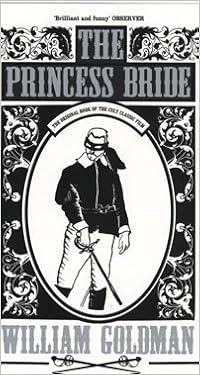
1. The Princess Bride by Willam Goldman

2. An Accident of Stars by Foz Meadows

3. Tithe by Holly Black

4. Stardust by Neil Gaiman

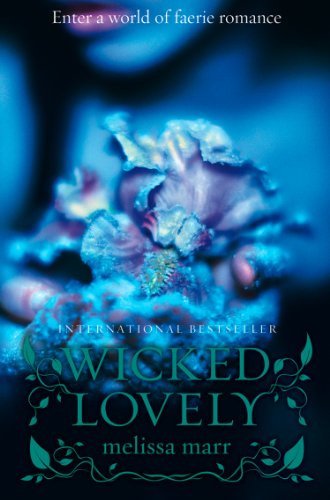
5. Wicked Lovely by Melissa Marr

6. The Book of Lost Things by John Connolly

7. Princess Princess by Katie O'Neill
(you can read the webcomic online or buy her book)

8. Princess Academy by Shannon Hale


For more ideas head into to the JYHS Library or the Lanthorn Library.

Search This Blog