Showing posts with label Homework Help. Show all posts

Home Schooling essay related videos

Sky news homeschooling article dating from Nov. 2018. Lasts 5min. Tries to offer both sides showing the positives and negatives of if being done badly.

Nadia Sawalha (from Loose Women) gives a parents perspective (UK England). Positive and pro-homeschooling. Lasts 5min 

Phebe Lou (US youtuber) talking about her pro/con list for homeschooling from someone who is home schooled. 6min 

India Grace - home schooled UK instead of high school roughly 15 in the video. She talks about her homeschooling origin story but skip to 6.30 to find out what her experience is actually like. It's very much a typical teen storytime youtube video lasts 20min.

American Homeschooling Infographic - American but it does move through the basics at a fair clip the video actually ends at 8.07 the remaining being an advert.

Is homeschooling a good idea?

Rough plan for a discursive essay:

Paragraph 1  - What is Home Schooling?

Some Basic Information on Home Schooling in Scotland

Some Basic Facts on Home Schooling in the UK
Issues Online - Home Learning in the UK

Paragraph 2 - What is good about Home Schooling?
Guardian article for home schooling

Paragraph 3 - What is bad about Home Schooling?
Daily Mail Article against home schooling

More places to look for both side of the argument:


Paragraph 4 - I think Home Schooling is...

Should the government makes laws against fake news?

Guideline for a discursive essay with suggested sources.

Point 1 - What is fake news? Why should the government take action?

Fake News can also be called disinformation or misinformation. It isn't new and false or misleading information has always been around, the problem now is that more people can see and share these stories.

Debating Matters has a good resource including more on key terms, background and essential reading. (Some of this is useful generally).

BBC Define fake news as:

"False information distributed deliberately, usually for political or commercial purposes"

For more details see this short video

The government should do something about fake news because:

UN Convention on Rights of the Child
Article 17 (access to information from the media)
"Every child has the right to reliable information from a variety of sources, and governments should encourage the media to provide information that children can understand. Governments must help protect children from materials that could harm them."


Point 2 - Examples of Fake News

The BBC class this into three types:


Point 3 - Government should make laws stopping fake news because:
Unreliable information can impact on politics and change how people vote in elections  Fake news is a problem for elections.
Angela Merkel arguing that governments need to take action on Fake News
Buzzfeed article on how fake news was more popular than correct news.
This this article on how fake news helped Donald Trump win.

Point 4 - Government should make laws stopping fake news because:
Misinformation can cause violence - two men burned to death in Mexico because of fake news
and Facebook accused of fueling violence in Sri Lanka

Point 5 - Government should make laws stopping fake news because:
Quick Statistics on why is fake news harmful to you as a person.
Plus Fake News can actually give you physical and mental health problems - Article on Fake News being bad for your health.

Point 6 - Some governments have or have tried to pass laws.
Singapore's Government is one who have made moves and this article shows both sides of that 
discussion.
You can also see what other countries are doing or trying to do by scrolling through this list.
 

Point 7 - Government making laws stopping fake news could be a problem because:

The UN Declaration of Human Rights says in article 19:
"Everyone has the right to freedom of opinion and expression; this right includes freedom to hold opinions without interference and to seek, receive and impart information and ideas through any media and regardless of frontiers".

Stopping false and misleading news could stop free speech which criticises or mocks governments, companies or people in positions of power.

The big concern is that those who disagree with those in power are stopped from having a voice. For example if it is illegal, anyone who the government decides is creating fake news could be arrested even if they are telling the truth.

Campaigners concern over laws and examples of some laws already employed
Article on Fake News threatening free speech
Russian clamp down on what people are saying on social media

Point 7 - Governments don't need to make laws because social media companies and others who host this fake news should take action to stop it.
Facebook take action to fact check stories.


Point 8 - Governments don't need to make laws we need to take responsibility
Article on why we need to take responsibility

Conclusion - what do you think? should the Government do more to make sure information is reliable?

Taking it further

Also studies suggest that it's the over 65's who are worst for sharing and spreading fake news not young people who have had to be more tech savvy from the start.


French Christmas


Task:
Find out about some French Christmas Traditions - present your findings in a powerpoint or poster.

Here are some ideas to get you started:

Santa Claus is known as le Père Noël. In some parts they celebrate the feast day of St Nicolas on the 6th.

St Nicolas has a helper le Père Fouettard.

In the city of Lyon there is a Festival of Lights known as La Fête des Lumières.

In Provence it's traditional to display a nativity scene (une crèche) which always includes a figure called le ravi.

Instead of a stocking hung by the fire, French children use a shoe (Le soulier de Noël).

On the 6th of January (L' Épiphanie) they traditionally eat King's Cake (La galette des Rois).

In Quebec, Canada (where French is the main language) it's so cold that every year they can build an Ice Hotel - where even the beds are made of ice! They also have a Winter Carnival (Carnaval de Québec) complete with a mascot called Bonhomme.

More information:
https://www.thelocal.fr/galleries/culture/christmas-in-france-top-ten-traditions
https://people.howstuffworks.com/culture-traditions/holidays-christmas/christmas-traditions-around-the-world-ga5.htm
https://frenchmoments.eu/the-french-traditions-of-christmas-les-traditions-francaises-de-noel/
https://www.frenchtoday.com/blog/french-culture/french-xmas-vocabulary-christmas-traditions-france

German Christmas


Task:
Find out about some German Christmas Traditions - present your findings in a powerpoint or poster.

Here are some ideas to get you started:

Is that you Santa Claus? 
There are four different names given to Santa Claus in Germany depending on where you live. He is called Weihnachtsmann, Nickel, Klaus, or Niglo.

Many Germans celebrate Nikolaustag (St. Nicolas Day) on the 6th of December.

If you fancy a bit of history have a look at:
Belsnickel - an older fur glad gift bringer who is said to be the inspiration for the Father Christmas described in the classic Christmas poem 'A Visit from St Nicolas'.

If you fancy a bit of creepy Christmas fun have a look for:
Knecht Ruprecht - St. Nicolas's Helper in Germany
Krampus - St. Nicolas's Helper in Austria

Food Glorious Food
Just like in the UK food forms an important part of the festivities. For example on Christmas Eve, there's an evening feast, generally of carp and potato salad.

das Christbaumgebäck - German Christmas tree pastry
der Lebkuchen, ginger spice cookies
der Dresdner Stollen, a moist, heavy bread filled with fruit and marzipan.


More Information
https://www.whychristmas.com/cultures/germany.shtml
http://www.vistawide.com/german/christmas/german_christmas_traditions.htm
https://www.german-way.com/history-and-culture/holidays-and-celebrations/christmas/


Mr Holt's Home Schooling Links

In Scotland children must be educated between the ages of five and 16, but they need not attend school.

Arguments for and against Homeschooling 
(warning- some of this may not be correct for Scotland)

IDEA - This House Supports Home Schooling


Mr.Holt's S3 Sugar Tax Links

Aim: to get a better understanding of the effects of sugar, and the reasons for and against a tax on it.


Outcome: to have 5 or 6 points and quotations about the health effects of sugar and reasons for and against a sugar tax.

How Mexico Took on the Soda Giants - The Guardian

Why is Sugar so Addictive - BBC 

Sugar Free Check App

Sugar Tax Would Work - BBC

Sugar Health Threat Underestimated - The Guardian  

Jamie Oliver Calls for 20% Sugar Tax on Fizzy Drinks - City AM

Sugar Tax Debate - City AM

Mrs. Hart - Shark Attack

•Information piece about the three types of unprovoked shark attacks. Entitled ‘Why Sharks Attack’
or
•Persuasive piece about why you think sharks should be protected or indeed why not! Entitled ‘Sharks – Persuasive Essay’
or
•Discursive about both points of view on the following topic, entitled…“Do Sharks Deserve their reputation as killers?”


Christmas Traditions

Bet You Didn't Know! Christmas Traditions video

27 Winter Holiday Traditions

Father Christmas isn't the only festive character, look at these other options from around the world:

Iceland - Jólakötturinn (Yule Cat), Gryla and Yule Lads (Jólasveinar)

Sweden - The Gävle Goat

Germany - Krampus and Belsnickel

Spain - Tio de Nadal, Caganer and Olentzero

Netherlands - Sinterklaas and Zwarte Piet

Wales -  Mari Lwyd

Russia - Ded Moroz

Italy -  La Befana

Greece - Kallikantzaroi

Latvia -  Mummers

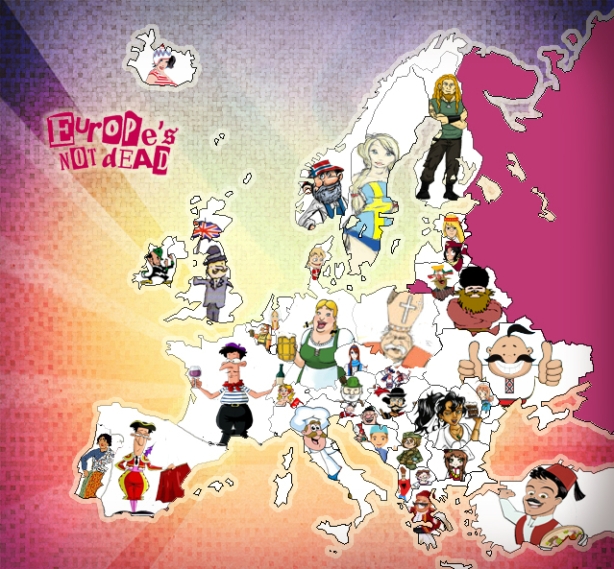
Mrs. Lyon's Stereotype Lesson Help

There are lots of stereotypes about Europeans. Here are a few places to find out some and bust a few of those myths:

For a general idea of European Stereotypes:

European Stereotypes (where the image comes from)

'What Europeans think of each other'

Europe divided up in 20 different ways


For country specific here are a few places to start your hunt:

French Stereotypes

Italian Stereotypes

Irish Stereotypes

England Stereotypes

German Stereotypes

Dutch Stereotypes

Polish Stereotypes

Spanish Stereotypes

Belgian Stereotypes

Swedish Stereotypes

Russian Stereotypes

Mrs. Richardson's Philosophy Links

For those doing research for Higher Philosophy these 'gateways' are a good place to start looking for high quality information on the web.

www.philosophypages.com 
a general website on western philosophical tradition

www.epistemelinks.com 
includes over 16,500 categorised links to philosophy resources on the Internet.

vos.ucsb.edu 
links to humanities and humanities-related resources on the internet.


Mrs.Wilson talked about better web searching and shared advice from Harvard on how to make Google work better for you. You can read that again or see more information on their website.

If you want to do more about improving your research skills Education Scotland has a short Information and Critical Literacy course that takes you through the steps involved to locate, evaluate and effectively use information.

If you are concerned about plagiarism and how you can avoid it The University of British Columbia guide on plagiarism is a really useful tool.

If you want any help or advice don't forget you can always come and speak to Mrs.Wilson in the library to get help.

Search This Blog